Refurbished Phones in 2026: Save Big or Regret It?
As the refurbished phones market grows past $50 billion, the real danger isn’t the device — it’s knowing which seller to trust.
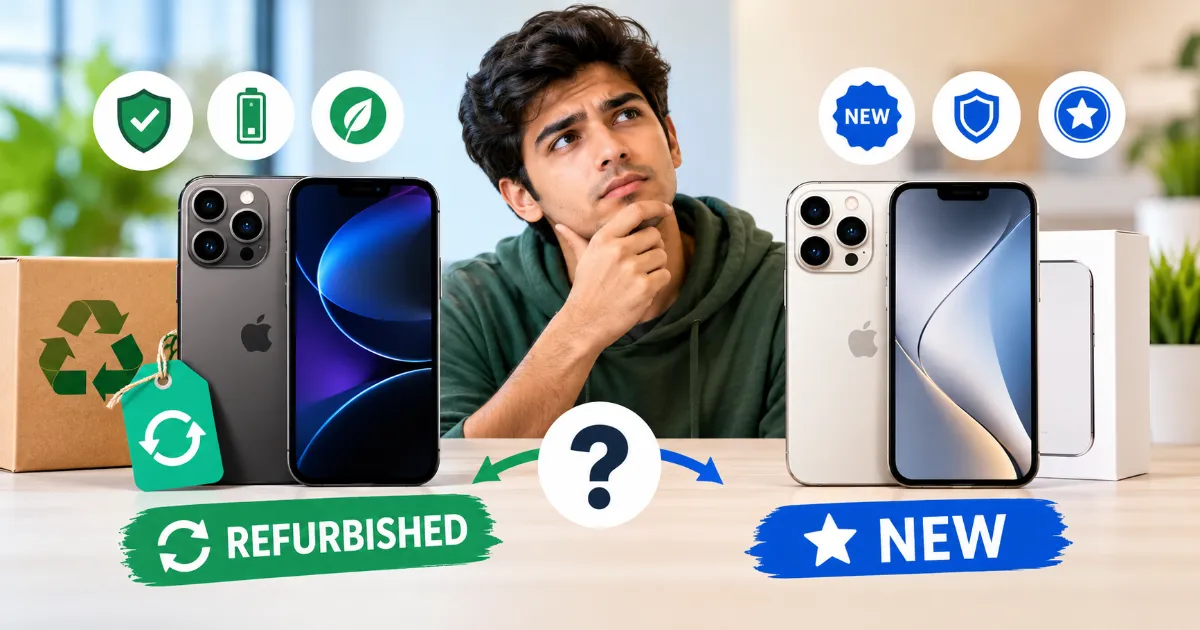
A Multi-Billion-Dollar Bet on “Good as New”
Refurbished phones have quietly gone mainstream. Market research firms now put the global refurbished and used mobile phone market at somewhere between $32 billion and $77 billion in 2026, depending on how narrowly “refurbished” is defined, with most forecasts projecting double-digit annual growth through the early 2030s. Refurbished devices specifically — as opposed to simply “used” — already account for over 58% of the broader second-hand phone market, and that share is expected to keep climbing as certified programs mature and consumer trust builds.
The appeal is easy to understand. New flagship phones routinely cross the $1,000 mark, while a certified refurbished version of the same model typically sells for 30-60% less. But that price gap raises the obvious question every buyer eventually asks: is a refurbished phone actually safe to buy, or are you just inheriting someone else’s problem at a discount? The honest answer, based on how the industry actually operates in 2026, is that it depends almost entirely on where you buy it — far more than on the fact that it’s refurbished at all.
Hybrid vs Electric in 2026: Which One Is Really Worth Your Money?
Humanoid Robots in Manufacturing: Hype or Reality? Inside the 2026 Factory Floor
Why the Market Exploded
A few forces converged to push refurbished phones from a niche budget option into a genuine mainstream category. Rising new-phone prices are the most obvious driver — as flagship devices have crossed the four-figure threshold, cost-conscious buyers have increasingly looked for a middle ground between “brand new” and “unverified used.” Carrier and manufacturer trade-in programs have also matured significantly, creating a steady, higher-quality supply chain of devices that previously would have simply sat in a drawer. Corporate electronics buyback and fleet-refresh programs have added to that inventory pipeline, reportedly improving turnover rates by more than 15% for professional refurbishers who rely on a consistent supply of trade-in devices.
Sustainability messaging has played a role too, particularly among younger buyers who weigh e-waste reduction as part of a purchase decision. And regulatory pressure — expanding right-to-repair laws and circular-economy mandates in the EU and parts of the U.S. — has pushed manufacturers to formalize refurbishment programs rather than leave the category entirely to third parties.
Understanding the Grading System (Because Not All “Refurbished” Means the Same Thing)
This is the single most important thing to understand before buying a refurbished phone: “refurbished” is not a fixed standard — it’s a spectrum, and sellers grade devices differently. Most refurbishers use some version of a letter or condition-based grading system:
- Grade A / “Excellent” / “Like New” — Minimal to no visible wear, fully functional, battery health typically above 85%, often includes original or high-quality replacement accessories.
- Grade B / “Good” — Light scratches or minor cosmetic wear visible on close inspection, fully functional, battery health usually in the 80-85% range.
- Grade C / “Fair” — Noticeable scratches, scuffs, or wear, fully functional but cosmetically imperfect, battery health can vary more widely.
The problem is that these grade definitions aren’t legally standardized across the industry — a “Grade A” phone from one seller may look meaningfully different from a “Grade A” phone from another. This inconsistency is exactly what industry analysts flag as one of the market’s biggest structural challenges: refurbishment quality consistency varies enough between sellers that the grade alone isn’t always a reliable signal.
OEM-Certified vs. Third-Party: The Trust Gap That Actually Matters
The real dividing line in the “is it worth the risk” question isn’t the grade — it’s who did the refurbishing. Broadly, refurbished phones fall into three trust tiers:
Tier 1: Manufacturer-certified programs — Apple Certified Refurbished, Samsung Renewed, and similar OEM-run programs. These devices are inspected and refurbished using genuine parts, undergo full diagnostic testing, typically include a fresh battery if health is below a set threshold, come in genuine (or genuine-equivalent) packaging, and carry a standard warranty — often matching or close to the warranty on a new device. This is the lowest-risk category by a wide margin.
Tier 2: Certified third-party marketplaces — Platforms like Back Market, Amazon Renewed, or carrier-certified trade-in programs. These aren’t run by the phone manufacturer, but they enforce their own testing standards, offer warranty coverage (commonly 6-12 months), and typically provide clear grading with photos and return windows. Quality is generally solid, though it varies more by individual seller within the marketplace than Tier 1 does.
Tier 3: Unverified third-party or peer-to-peer resale — Marketplace listings, classifieds, or informal resellers with no certification, no standardized testing, and often no warranty at all. This is where the real risk concentrates, and it’s also, unfortunately, where a significant volume of “refurbished” phones are actually sold — industry reports specifically flag informal peer-to-peer resale as a major source of inventory fragmentation and inconsistent quality in the broader market.
The Real Risks — and How Often They Actually Happen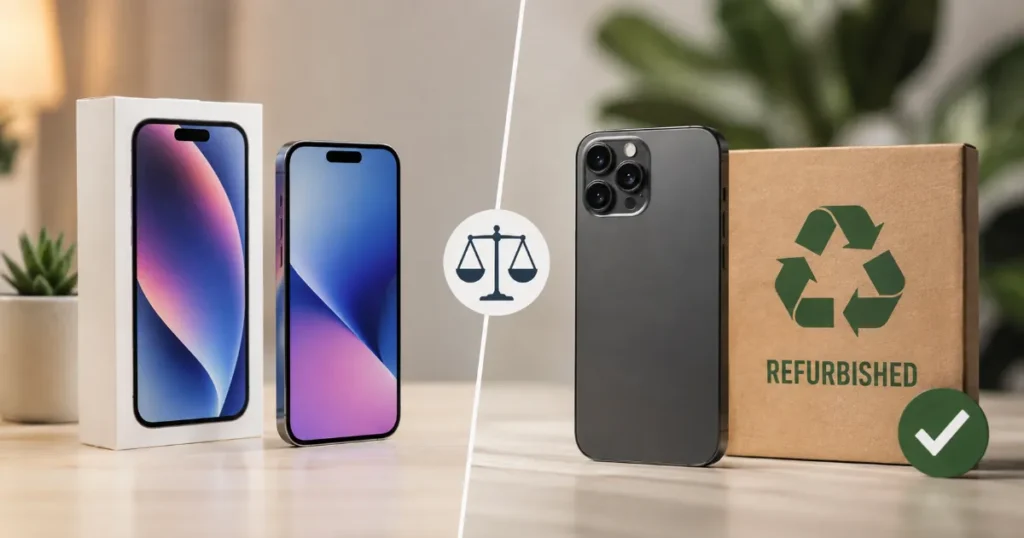
Undisclosed battery health. A phone advertised as “excellent condition” cosmetically can still have a battery that’s degraded well below the 80% health threshold most buyers would consider acceptable. This is the single most common complaint associated with lower-tier refurbished purchases, and it’s also the easiest to verify before buying if the seller discloses battery health data upfront — which certified programs generally do, and unverified sellers often don’t.
Hidden physical or water damage. Cosmetic inspection catches scratches and dents; it doesn’t always catch prior liquid exposure, which can cause problems months after purchase. Reputable refurbishers test for this using liquid-contact indicators built into the device; uncertified resellers may skip this step entirely.
Non-OEM or counterfeit replacement parts. Cheaper refurbishment operations sometimes replace screens, batteries, or cameras with lower-quality aftermarket components to cut costs — a practice that’s far less common in manufacturer-certified programs, where genuine parts are part of the certification standard, but a real risk in the unverified third-party tier.
Incomplete data wiping. This is a genuine and growing concern as data security regulations tighten. Certified refurbishers are increasingly expected to follow formal data-sanitization standards such as NIST 800-88 and comply with regulations like GDPR when handling devices that pass through their systems. A phone that hasn’t been properly wiped by a previous owner or an informal reseller carries real privacy risk — something a formal, audited refurbishment process is specifically designed to prevent.
Blacklisted or stolen devices. A phone can look and function perfectly while carrying an IMEI number that’s been blacklisted due to a prior theft report or unpaid carrier balance — meaning it may not activate on a network at all. This risk is close to zero through certified programs, which verify IMEI status as a standard part of processing, but is a real possibility in unverified peer-to-peer sales.
Limited or no warranty. This is less a hidden risk than a visible one buyers sometimes ignore. A refurbished phone with no warranty at all means any of the above problems become entirely the buyer’s financial responsibility the moment the sale completes.
A Practical Buying Checklist
For anyone weighing a refurbished purchase, the risk genuinely is manageable with a few concrete checks:
- Buy from a certified source — manufacturer program, major retailer’s certified-refurbished listing, or an established marketplace with its own testing and warranty standard.
- Confirm battery health as a number, not just a condition grade — anything below 80% should factor into the price you’re willing to pay.
- Check the warranty length in writing — 90 days should be considered a minimum; 6-12 months is increasingly standard among reputable sellers.
- Verify the IMEI is clean before completing the purchase, using a free IMEI checker tool, particularly for peer-to-peer or marketplace listings.
- Confirm the return window — a seller unwilling to offer at least 14-30 days to return a device for any reason is a red flag worth taking seriously.
- Ask specifically about data wiping standards if buying from a smaller or regional refurbisher, particularly for a device that will hold sensitive personal or work data.
When Refurbished Makes Sense — and When It Doesn’t
Refurbished phones make the most sense for buyers purchasing through a certified channel, who don’t need the absolute latest model, and who are comfortable trading a small amount of cosmetic imperfection or a slightly older chipset for a substantial price reduction — commonly 30-60% off a comparable new device. They make less sense for buyers drawn purely to the lowest possible price from an unverified seller with no warranty, where the savings can evaporate quickly the moment a battery, screen, or hidden fault needs replacing out of pocket.
The Verdict
Are refurbished phones worth the risk? For the growing majority of the market now flowing through OEM-certified programs and reputable certified marketplaces, the honest answer is yes — the risk is low, well-documented, and backed by real warranty coverage. The danger was never really the word “refurbished” itself; it’s the unverified corner of the market that still exists alongside it. Treat the seller’s certification and warranty terms as the actual product you’re evaluating, and a refurbished phone in 2026 is, for most buyers, a genuinely smart trade-off rather than a gamble.
▪️▪️ Follow us on Facebook ▪️▪️

2 Comments